Menopause Diet and Exercise: What the Evidence Says
Food and movement cannot stop menopause, but they can protect muscle, bone and heart health. Here is what research supports, what is still unclear, and how to start.

On this page
- Why does the body change during menopause?
- Is there a menopause diet that works?
- How do the main eating patterns compare?
- Which exercise is best during menopause?
- What the research says about food and movement
- How do you start a menopause diet and exercise plan?
- Does exercise change hot flashes or sleep?
- Are there common myths about menopause diets?
- When to see a doctor
- Regional notes
- Frequently asked questions
- The bottom line
A menopause diet cannot stop the hormone changes of midlife, but the way you eat and move can protect muscle, bone and heart health during and after the transition. Research supports an eating pattern rich in vegetables, beans, whole grains, fish and olive oil, enough protein at every meal, and strength training at least twice a week. Evidence for individual foods, such as soy, is more mixed.
Menopause: the point 12 months after your last menstrual period, when the ovaries have made little estrogen for a full year, and the years before it when hormone levels begin to swing are called perimenopause.
Key takeaways
- According to the World Health Organization's menopause fact sheet, natural menopause generally occurs between ages 45 and 55.
- The Bone Health & Osteoporosis Foundation links the drop in estrogen after menopause with faster bone loss in the early postmenopausal years.
- A Mediterranean-style eating pattern reduced major cardiovascular events in the PREDIMED trial compared with a control diet based on advice to reduce dietary fat, a finding that held up when the trial was reanalyzed and republished in 2018.
- The PROT-AGE expert group recommends that adults over 65 eat more protein than younger adults, at least 1.0 to 1.2 g per kilogram of body weight a day.
- WHO physical activity guidance for adults recommends muscle-strengthening activity on two or more days a week.
- Evidence that soy or other phytoestrogens reliably reduce hot flashes is mixed, so food alone is unlikely to replace medical treatment for severe symptoms.
- Strength training, balance work and regular walking are the best-supported forms of movement for protecting function and bone during menopause.
Why does the body change during menopause?
Estrogen does more than manage the menstrual cycle. It helps regulate bone turnover, fat storage, appetite signals, blood vessel function and the way muscle responds to exercise. When estrogen falls, these systems shift at the same time, which is why a diet or exercise plan that worked in your thirties may feel less effective in your late forties or fifties. The change is not a personal failing. It is a hormonal transition that changes the body's needs.
The National Institute on Aging explains that menopause is a natural stage of life, and that its physical effects are shaped by age, genetics and lifestyle. The good news is that lifestyle factors are among the few levers that people can control. Diet and movement will not restore the hormone levels of your twenties, but they can reduce the loss of function that many women fear. Tracking symptoms alongside food and movement, for example in Shebalance, can show what is actually changing. Our guide to perimenopause symptoms explains how the transition begins.
What happens to muscle and metabolism?
Muscle mass naturally declines with age, and midlife is a period when that decline can speed up. Less muscle means less glucose uptake after meals and a slower resting metabolic rate. Some women also notice that their bodies store more fat around the abdomen after menopause, even when the scale barely moves. Data from the Study of Women's Health Across the Nation (SWAN), a long-running U.S. cohort, have described shifts in body fat distribution across the menopause transition. The practical lesson is that building and keeping muscle matters as much as the number on the scale. Our guide to menopause weight gain explores this in more detail.
What happens to bone?
Bone is living tissue that is constantly rebuilt. Estrogen helps slow the rate at which old bone is removed. When estrogen falls, bone loss can speed up for several years, and women can lose bone density quickly in the early postmenopausal period. The Bone Health & Osteoporosis Foundation explains that this loss increases fracture risk later in life, which is why bone health is a core part of menopause planning. Weight-bearing and resistance exercise send signals that help bone maintain its strength, and nutrition supplies the raw materials. Our guide to menopause and bone loss covers testing and prevention.
Why does heart risk rise?
Heart disease becomes more common after menopause, and estrogen's protective effect on blood vessels is one reason. The American Heart Association recommends the same heart-healthy habits for all adults, including a diet low in saturated fat and sodium and rich in plants, regular physical activity, and not smoking. Midlife is a good time to check blood pressure, cholesterol and blood sugar with a clinician. The details of heart risk are covered in our guide to menopause and heart health.
Is there a menopause diet that works?
No single diet has been designed for menopause and tested across large trials for every symptom. Instead, researchers study eating patterns and nutrients that match the physiological changes described above. The strongest evidence points to a few consistent themes: enough protein, plenty of fiber from plants, healthy fats, calcium and vitamin D from food or supplements when needed, and limited ultra-processed food and alcohol. These themes fit comfortably into many cultural food traditions.
How does Mediterranean-style eating help?
The Mediterranean eating pattern emphasizes vegetables, fruit, legumes, whole grains, nuts, fish, olive oil and moderate amounts of dairy, with little red meat and few sweets. The PREDIMED trial, a large Spanish study published in the New England Journal of Medicine, randomly assigned adults at high cardiovascular risk to a Mediterranean diet supplemented with olive oil or nuts, or to a control diet with advice to reduce dietary fat. The Mediterranean groups had fewer major cardiovascular events. The original 2013 report was retracted because some participants had not been properly randomized, and a reanalysis republished in 2018 reached similar conclusions. Participants were men and women aged 55 to 80, not women going through menopause specifically, so the findings apply to midlife heart health in general, but the pattern is a sensible starting point for most people after menopause.
Mediterranean-style eating is not a weight-loss prescription. It is a pattern that supports heart, blood sugar and gut health. Many women find that it helps them feel fuller, which can make it easier to maintain a healthy weight over time.
Why does protein matter more in midlife?
Protein supplies the amino acids that muscle needs to repair and grow. Researchers who study aging have proposed that older adults often need more protein per meal than the basic daily minimum to keep muscle responsive to exercise. The PROT-AGE Study Group published a widely cited position paper on protein for people over 65 that makes this case, recommending at least 1.0 to 1.2 g of protein per kilogram of body weight a day for healthy older adults. Their recommendations are a research consensus rather than a clinical rule, so ask your clinician or a registered dietitian how much protein fits your health, especially if you have kidney disease.
In practice, many people find it easiest to include a source of protein at every meal, such as eggs, Greek yogurt, fish, tofu, lentils, chicken or a cottage cheese snack. Spreading protein across the day seems to support muscle better than eating most of it at dinner.
Try it
Track how you feel after meals with a few quick taps each day, so you can see whether more protein, sleep or movement changes your energy and hot flashes. Open Shebalance
What about plant foods, fiber and phytoestrogens?
Plant foods supply fiber, which feeds beneficial gut bacteria and supports steady blood sugar. They also contain phytoestrogens, plant compounds that can act weakly on estrogen receptors. The main dietary sources are soy foods such as tofu, tempeh and edamame, along with flaxseed, lentils and chickpeas.
Phytoestrogen research on hot flashes is mixed. Some trials and reviews report modest reductions in hot flash frequency, while others find no clear benefit. A 2013 Cochrane review of phytoestrogens for menopausal vasomotor symptoms found no conclusive evidence that phytoestrogen supplements reduce the frequency or severity of hot flashes and night sweats, although it said concentrated genistein deserves further study. Soy foods are generally safe as part of a normal diet, but soy supplements, which can contain concentrated isoflavones, have less evidence behind them and should be discussed with a clinician, particularly if you have a history of hormone-sensitive cancer.
Do you need extra calcium and vitamin D?
Calcium and vitamin D work together for bone health. Dairy foods, fortified plant milks, leafy greens, canned fish with bones and tofu made with calcium sulfate all contribute calcium. Vitamin D comes from sunlight, fortified foods and supplements. Whether you need a supplement depends on your diet, sun exposure, kidney function and bone density results, so ask your clinician rather than guessing. The Office on Women's Health describes menopause-related bone and nutrition advice in its menopause resources.
Where do low-carb and fasting diets fit?
Low-carbohydrate and time-restricted eating patterns are popular, and some women report better appetite control on them. The evidence for menopause-specific outcomes is limited and short-term in many studies. The most important safety point is muscle. Any approach that creates a large calorie deficit can lose muscle along with fat, which is the opposite of what midlife bodies need. If you try a restrictive pattern, pair it with adequate protein and strength training, and stop if you feel dizzy, faint or unwell.
How do the main eating patterns compare?
The table below summarizes how common approaches stack up against the main midlife goals. Evidence labels describe the strength of research for menopause-related outcomes, not the popularity of a diet.
| Eating approach | Main idea | Best supported for | Evidence strength | Watch out for |
|---|---|---|---|---|
| Mediterranean-style | Plants, fish, olive oil, legumes, whole grains | Heart health, overall diet quality | Strong for cardiovascular outcomes | Still needs enough protein and calories |
| Higher-protein eating | Protein at each meal, plus strength training | Preserving muscle during weight management | Moderate, with growing research on older adults | Kidney disease needs clinician guidance |
| Plant-forward with soy | Tofu, tempeh, edamame and beans | Protein and fiber intake; possible small effect on hot flashes | Limited to mixed for symptoms | Soy supplements are not the same as soy foods |
| Low-carbohydrate | Fewer grains, sugars and starches | Short-term appetite control and blood sugar | Limited for menopause-specific outcomes | Risk of muscle loss and low fiber |
| Time-restricted eating | A set daily eating window | Simplicity for some people | Limited for menopause-specific outcomes | Can worsen energy and sleep in some women |
Which exercise is best during menopause?
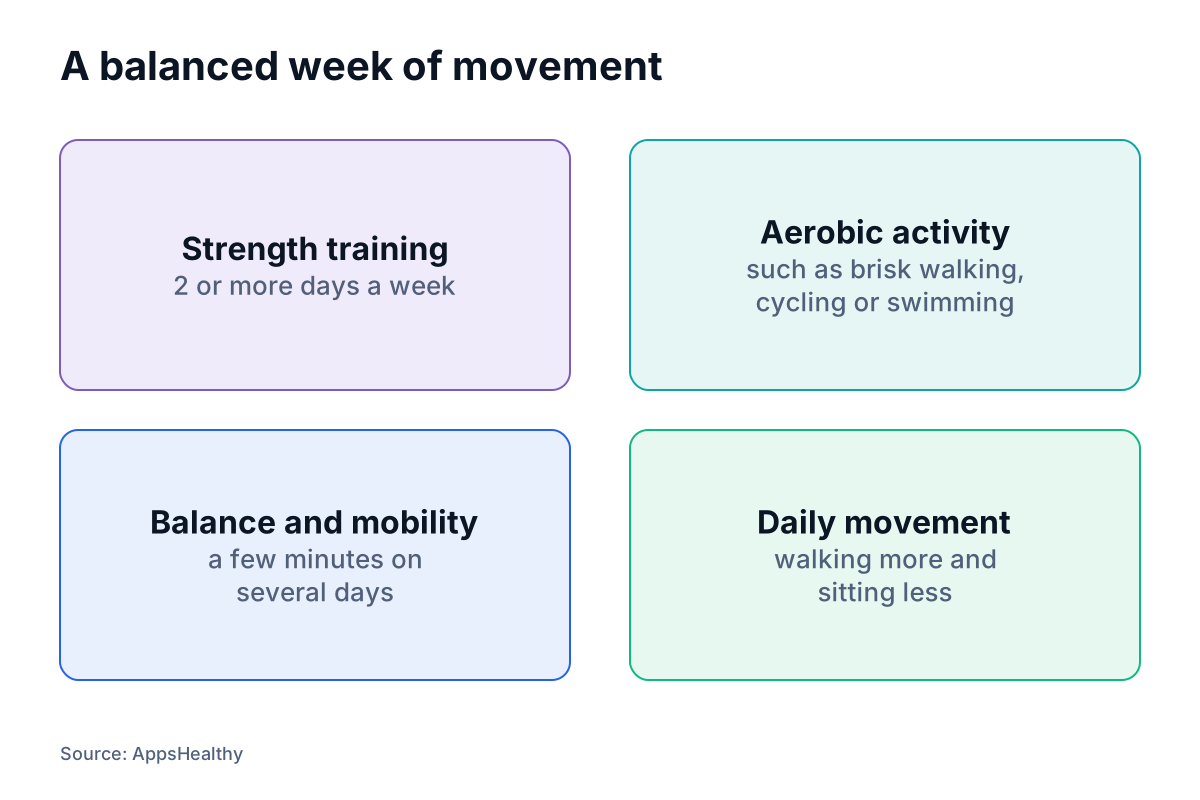
Exercise is the one lifestyle tool with strong support for several menopause concerns at once. It helps protect muscle, bone, heart, mood and sleep, and it does not require a specific diet to work. The World Health Organization's physical activity guidance for adults recommends a mix of aerobic activity and muscle-strengthening work every week, with balance and strength activities on three or more days a week for adults aged 65 and older to help prevent falls. If you are new to exercise, start where you are and build gradually.
Is strength training essential?
Strength training is the most important addition for most women in midlife. It uses resistance, such as weights, bands, body weight or machines, to load muscles and bones. Systematic reviews of exercise in women after menopause generally report that resistance training improves muscle strength and can help maintain bone density, particularly at the hip and spine. Strength training does not have to mean a gym membership. Squats to a chair, step-ups, wall push-ups, rows with a resistance band and carrying groceries all build useful strength when they are progressed over time.
Start with two sessions a week, each covering the major muscle groups: legs, hips, back, chest, shoulders and core. Aim for a challenge where the last two or three repetitions feel hard but controlled. Rest a day between sessions, and increase the load slowly as the movements become easier.
How much aerobic activity do you need?
Aerobic activity raises your heart rate and breathing. Brisk walking, cycling, swimming and dancing all count. WHO guidance suggests 150 to 300 minutes of moderate activity a week, or an equivalent amount of vigorous activity. Many women find it easier to build this in short blocks of 10 to 20 minutes than in a single long session. Aerobic exercise supports heart health, blood pressure, mood and sleep, and it can improve how you feel on the days you do it.
Why do balance and mobility matter?
Balance declines with age and can become less steady during the years when sleep and joint pain also change. Balance exercises include standing on one foot near a counter, heel-to-toe walking, sit-to-stand practice and tai chi. These are low-impact, can be done at home, and reduce the risk of falls, which matter more as bone density falls. If you have joint pain, a physiotherapist can design a safe plan. Our guide to menopause joint pain covers this topic in more depth.
What about the pelvic floor?
Pelvic floor muscles support the bladder, bowel and uterus, and their strength can change in midlife. Gentle pelvic floor exercises, sometimes called Kegels, can be useful for some women, though technique matters. A pelvic health physiotherapist can check whether you are contracting and relaxing the muscles correctly. Pelvic floor concerns deserve clinical attention, not silence.
What the research says about food and movement
Several bodies of evidence shape current advice. The World Health Organization's 2020 guidelines on physical activity and sedentary behaviour set out the weekly activity recommendations used in this article, and they emphasize that some activity is better than none. The Menopause Society, a North American clinical organization, publishes position statements on menopause care that include lifestyle guidance alongside hormone therapy and nonhormonal options. The NHS menopause guidance in the United Kingdom, and NICE guideline NG23 that sits behind it, describe menopause symptoms and management for clinicians and patients.
The PREDIMED trial is the best-known randomized study of an eating pattern for cardiovascular prevention. It supports Mediterranean-style eating for heart health, but it was not designed specifically for menopause. PROT-AGE, a protein consensus for adults over 65, supports higher protein intake for muscle preservation, and it is an expert consensus rather than a single large trial. The Cochrane review of phytoestrogens found no conclusive evidence that supplements reduce hot flashes. Systematic reviews of exercise in postmenopausal women generally support resistance training for muscle and bone, while the evidence for specific diets and menopause symptoms is still developing.
The honest summary is that the best-supported advice is also the most ordinary: eat a varied diet built around plants and protein, move every day, and lift weights regularly. Very few claims about a "menopause diet" have the strength of this foundation.
How do you start a menopause diet and exercise plan?
Many women find that a slow, specific plan works better than an overhaul. The steps below follow the research themes above and can be adjusted with your clinician.
- Check your baseline with your clinician, including blood pressure, cholesterol, blood sugar, bone density if indicated, and any joint or heart concerns.
- Add one protein source to each meal, and notice whether you feel fuller and more satisfied.
- Make half your plate vegetables and fruit at lunch and dinner, and include a legume or whole grain most days.
- Choose olive oil, nuts, avocado or fish as your main fats, and limit ultra-processed snacks.
- Begin two short strength sessions a week, using bands, bodyweight or light weights, and progress slowly.
- Walk briskly for 10 to 20 minutes on several days, and add more time as your energy allows.
- Practice balance work for a few minutes, two or three times a week, such as standing on one foot while brushing your teeth.
- Log symptoms, sleep, meals and workouts for several weeks in Shebalance, then review the patterns with your clinician.
- Adjust one thing at a time, so you can tell what is helping.
Does exercise change hot flashes or sleep?
Exercise is not a reliable hot flash cure, but it can help sleep, mood and general energy. Some women notice that regular daytime activity makes it easier to fall asleep, while very intense late-evening workouts can keep others awake.
Alcohol and large evening meals are also linked with night sweats and disturbed sleep for many people, so paying attention to timing is useful. A symptom log such as Shebalance makes those timing patterns easier to see. If hot flashes or sleep problems are severe, discuss treatment options with a clinician rather than relying on diet and exercise alone. Our guide to menopause insomnia and night sweats explains the evidence on those options.
Consider an illustrative example: a 52-year-old office worker who has noticed more belly fat and disrupted sleep. She adds protein to breakfast, walks at lunchtime, and starts two short strength sessions at home. After six weeks, she notices that her energy is steadier and that she can climb stairs without feeling breathless. Her clinician recommends a bone density scan based on her age and risk, which she schedules. The plan did not reverse menopause, but it protected the things she cared about most.
Are there common myths about menopause diets?
Myths spread quickly on social media, and some of them can cause harm. The most common ones deserve a clear answer.
Do you have to cut carbohydrates to lose menopause weight?
Not necessarily. Carbohydrates are not the enemy of midlife health, but refined and sugary carbohydrates can cause large blood sugar swings and offer little fiber. Whole grains, beans and fruit provide fiber and nutrients. The best approach is usually to choose higher-fiber carbohydrates in sensible portions, rather than removing an entire food group. Your needs depend on your health history, so a dietitian can help you find a pattern you can sustain.
Is cardio the best way to protect midlife health?
Cardio is valuable, but it is not the whole answer. Aerobic exercise supports the heart, while strength training protects muscle and bone. Both are needed. A plan that includes only cardio can leave muscle and bone under-stimulated, which is why the recommendations above include both.
Can detox teas or cleanses reset hormones?
There is no good evidence that detox products reset hormone levels. Some products can cause diarrhea, dehydration or interactions with medicines. Your liver and kidneys handle normal waste removal, and a varied diet with adequate fluids supports them. If a product promises to balance hormones, treat that promise with caution.
When to see a doctor
Most menopause-related changes in diet, weight and fitness are gradual and manageable. Some symptoms need prompt medical attention, whatever your age or menopause status.
Get urgent care if you notice
- Any vaginal bleeding after menopause, or bleeding that is heavier than usual while you are in perimenopause
- Chest pain, pressure or tightness, especially with breathlessness, sweating or pain spreading to the arm or jaw
- Sudden shortness of breath, coughing blood or a fast heartbeat
- Pain, swelling or warmth in one leg, which can be a sign of a blood clot
- A sudden fall, fainting, or a new weakness on one side of the body
- Thoughts of harming yourself or ending your life. In the UK, call 999 in an emergency or Samaritans on 116 123. In the US, call or text 988.
Call your clinician promptly if you lose weight without trying, feel unusually weak, or have dizziness or palpitations after starting a new diet or exercise plan. Stop any new routine that causes chest pain or severe breathlessness, and seek care.
Regional notes
United States. The Office on Women's Health and the National Institute on Aging describe menopause and lifestyle guidance for U.S. readers, and the Centers for Disease Control and Prevention publishes general physical activity recommendations. The Food and Drug Administration (FDA) regulates prescription and over-the-counter products, including supplements sold with menopause claims, so check product labels and ask your clinician about any supplement that promises hormonal effects.
United Kingdom. The NHS menopause guidance and NICE guideline NG23 are the main references for menopause care in England and Wales. The NHS encourages regular physical activity and a balanced diet as part of menopause management. Scotland and Northern Ireland follow similar principles through their own health services.
European Union and Australia. Public health systems in the EU and Australia generally promote balanced eating and regular activity for midlife adults, but the specific guidance varies by country. Australian readers can consult the Therapeutic Goods Administration (TGA) for the regulation of supplements and medicines, and their clinicians can refer to national menopause guidelines.
South Asia and the Middle East. Diets in these regions often include rice, wheat, legumes, dairy and vegetables that fit the principles above. Studies report that vitamin D deficiency is common in many countries in these regions, even in sunny places, with indoor lifestyles, covering clothing and darker skin among the suggested reasons, so ask a clinician to check levels if you have bone or fatigue concerns. Strength training and walking may need to be adapted to local safety norms, and women-only or home-based options can make them easier to sustain.
Frequently asked questions
What is the best diet for menopause?
The best-supported approach is an eating pattern rich in vegetables, fruit, legumes, whole grains, fish, nuts and olive oil, with enough protein at each meal. The Mediterranean-style pattern has the strongest evidence for heart health. This approach supports muscle, bone and blood sugar while allowing flexibility for your culture, budget and preferences. Ask a registered dietitian or your clinician to adapt it to any medical conditions you have.
Does protein really help during menopause?
Protein helps maintain muscle, which supports strength, metabolism and physical function. Researchers studying healthy aging, including the PROT-AGE Study Group, recommend more protein than the basic minimum for adults over 65, especially when combined with strength training. People with kidney disease need clinician guidance on protein amounts.
Is strength training better than cardio for menopause?
Both matter, and they do different jobs. Strength training is especially important for preserving muscle and bone density, while aerobic activity supports heart, blood pressure, mood and sleep. Most women benefit from doing both each week. If you can do only one type to start, strength training is a strong choice for protecting bone and function.
Can soy help with hot flashes?
Soy foods may offer a small benefit for some women, but the evidence is mixed. Systematic reviews of phytoestrogens, including a 2013 Cochrane review, have found no conclusive evidence that they reduce hot flashes. Soy foods are a healthy part of a varied diet. Soy supplements are a different matter, so talk with a clinician before taking them, especially if you have a history of breast or other hormone-sensitive cancer.
How much exercise do I need after menopause?
WHO guidance for adults recommends 150 to 300 minutes of moderate aerobic activity a week, or an equivalent amount of vigorous activity, plus muscle-strengthening work on two or more days. For adults aged 65 and older, WHO adds balance and strength activities on three or more days a week to help prevent falls. You can build up gradually, and any increase in movement is better than none.
Does exercise help with menopause belly fat?
Regular exercise, especially strength training combined with aerobic activity, can support a healthier body composition over time. It may not reduce belly fat on its own, and genetics, sleep, stress and hormone changes also play roles. Focus on the health benefits of a stronger, more active body, rather than on a single body measurement.
Should I take supplements for menopause?
Some women need supplements, such as vitamin D or calcium, depending on their diet, sun exposure and bone health. Many other products marketed for menopause have limited evidence. Ask your clinician before starting any supplement, check for interactions with medicines, and be cautious about products that promise hormone balance.
The bottom line
The menopause diet that research supports is not a trend. It is a steady pattern: plenty of plants, enough protein at every meal, healthy fats, limited ultra-processed food and alcohol, and regular movement that includes strength training. Mediterranean-style eating has the strongest evidence for heart health. Protein and resistance exercise protect muscle and bone, which matter for independence later in life. Soy and other phytoestrogens may help some women a little, but they are not a substitute for medical care when symptoms are severe. Start with one change, track how it affects your energy and sleep, and review your plan with your clinician. A simple log in Shebalance can help you see patterns over weeks, and it stays private on your device.
Medical disclaimer
This article is for education only and is not medical advice. It does not replace a consultation with a qualified healthcare professional. Diet, supplements and exercise plans can affect medical conditions and medicines, so speak with your clinician before making significant changes, especially if you have heart, kidney, bone or joint conditions, a history of cancer, or an eating disorder history.
References
- World Health Organization. Menopause fact sheet. https://www.who.int/news-room/fact-sheets/detail/menopause
- World Health Organization. WHO guidelines on physical activity and sedentary behaviour. Geneva: WHO; 2020. https://www.who.int/publications/i/item/9789240015128. Summary: Bull FC, Al-Ansari SS, Biddle S, et al. World Health Organization 2020 guidelines on physical activity and sedentary behaviour. British Journal of Sports Medicine. 2020;54(24):1451-1462. https://doi.org/10.1136/bjsports-2020-102955
- National Institute on Aging. Menopause. https://www.nia.nih.gov/health/menopause
- Office on Women's Health. Menopause. https://www.womenshealth.gov/menopause
- The Menopause Society. https://menopause.org/
- NHS. Menopause. https://www.nhs.uk/conditions/menopause/
- NICE. Menopause: diagnosis and management, guideline NG23. https://www.nice.org.uk/guidance/ng23
- Bone Health & Osteoporosis Foundation. https://www.bonehealthandosteoporosis.org/
- American Heart Association. https://www.heart.org/
- Estruch R, Ros E, Salas-Salvadó J, et al.; PREDIMED Study Investigators. Primary prevention of cardiovascular disease with a Mediterranean diet supplemented with extra-virgin olive oil or nuts. New England Journal of Medicine. 2018;378(25):e34. https://doi.org/10.1056/NEJMoa1800389 (corrected and republished; the original 2013 report, N Engl J Med 2013;368(14):1279-1290, was retracted)
- Bauer J, Biolo G, Cederholm T, et al. Evidence-based recommendations for optimal dietary protein intake in older people: a position paper from the PROT-AGE Study Group. Journal of the American Medical Directors Association. 2013;14(8):542-559. https://doi.org/10.1016/j.jamda.2013.05.021
- Lethaby A, Marjoribanks J, Kronenberg F, Roberts H, Eden J, Brown J. Phytoestrogens for menopausal vasomotor symptoms. Cochrane Database of Systematic Reviews. 2013;(12):CD001395. https://doi.org/10.1002/14651858.CD001395.pub4
- Study of Women's Health Across the Nation (SWAN). https://www.swanstudy.org/
Shebalance
Track PCOS and menopause symptoms privately: one-tap logs, weekly trends and a doctor-ready PDF. Free, no account.


